
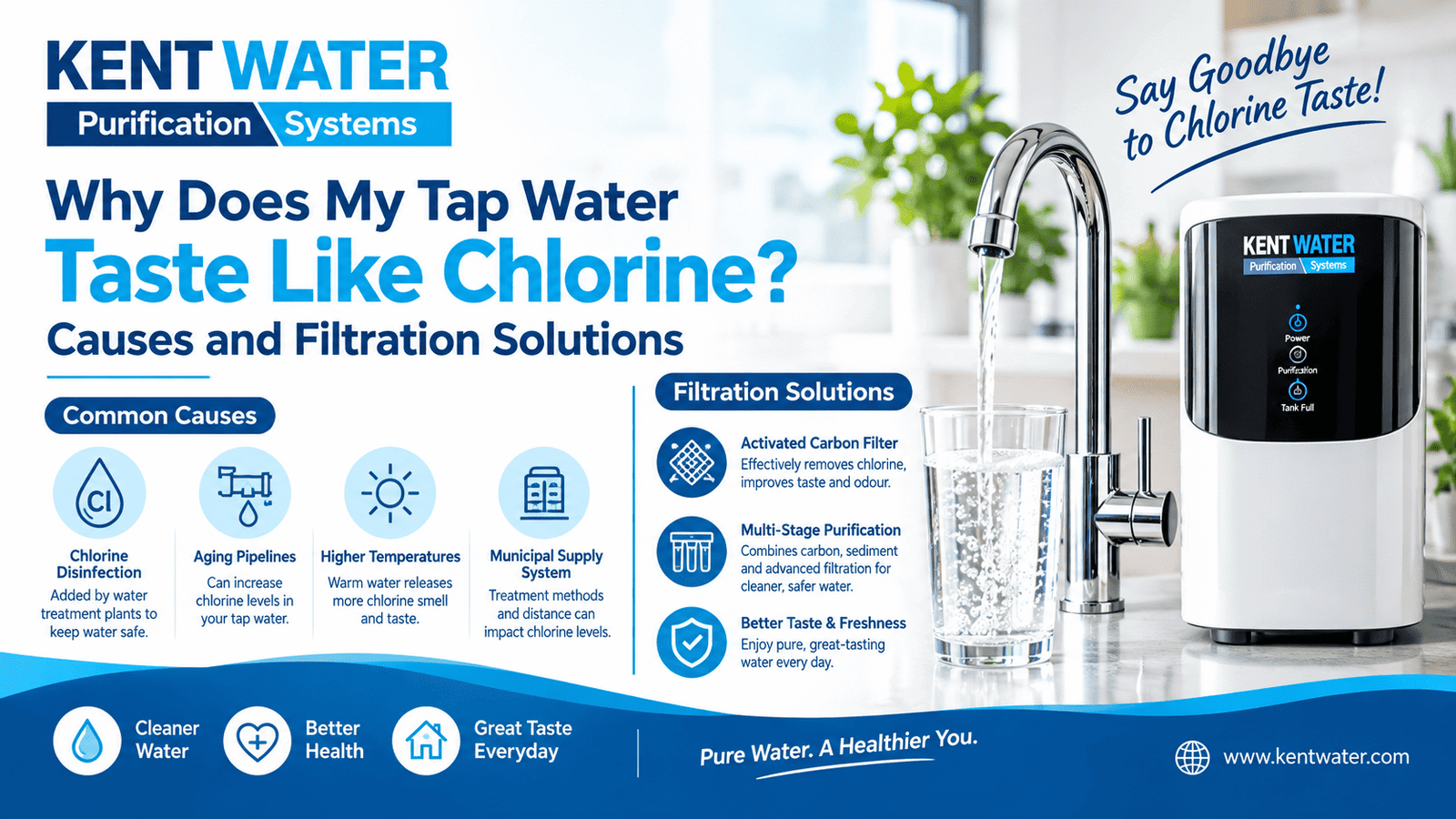
You fill a glass of water, take a sip, and immediately notice a swimming-pool-like taste. It’s one of the most common questions homeowners across Canada ask: Why does my tap water taste like chlorine?
The good news is that a chlorine taste doesn’t automatically mean there’s something wrong with your drinking water. In many Canadian municipalities, chlorine water filter is intentionally added during the treatment process to help protect water from harmful bacteria as it travels through the distribution system to homes.
That said, a strong chlorine taste can make drinking tap water less enjoyable. The good news is that there are practical ways to reduce the taste without compromising water safety.
This guide explains why tap water sometimes tastes like chlorine, when you should pay attention to changes in taste, and which filtration options can help.
Why Is Chlorine Added to Tap Water?
Before water reaches your home, it goes through several treatment steps at municipal water treatment plants. One of the final stages often involves adding chlorine or a chlorine-based disinfectant.
The purpose is simple: chlorine helps prevent harmful microorganisms from growing in the water distribution system while the water travels through underground pipes to homes and businesses. Health Canada recognizes chlorine as an important part of municipal drinking-water disinfection.
In other words, chlorine is there to help protect water quality—not to change its taste.
Why Does My Tap Water Taste More Like Chlorine Sometimes?
Not everyone notices the same taste, and the intensity can change throughout the year.
Several factors can make chlorine more noticeable.
1. Seasonal Water Treatment Changes
Municipal water systems sometimes adjust disinfectant levels or treatment processes during different seasons to maintain water quality throughout the distribution network.
These changes can make chlorine taste more noticeable at certain times of the year, even when the water continues to meet drinking-water standards.
2. Water Has Been Sitting in Your Pipes
If water remains inside your home’s plumbing overnight or while you’re away, the first glass from the tap may taste different.
Running cold water briefly can bring in fresher water from the municipal supply.
3. Warmer Water Can Make the Taste Stronger
Cold water usually tastes cleaner than warm tap water.
As water temperature increases, chlorine odour can become easier to notice.
This is one reason it’s generally recommended to use cold tap water for drinking and cooking, then heat it if necessary.
4. New Plumbing or Home Renovations
After plumbing repairs or renovations, municipalities or plumbers may disinfect sections of the plumbing system.
A temporary chlorine smell or taste can occur while the system is being flushed.
5. Individual Taste Sensitivity
Some people are naturally more sensitive to chlorine than others.
Two people drinking water from the same tap may describe the taste very differently.
Is Chlorine in Tap Water Safe?
For municipal drinking water filtration for chlorine is used in carefully managed amounts as part of the disinfection process.
Health Canada establishes guidelines for drinking-water quality and recognizes chlorine’s role in helping keep municipal water microbiologically safe.
A noticeable chlorine taste does not automatically mean the chlorine level is unsafe.
However, if you experience a sudden, unusual or extremely strong change in water taste, smell or appearance, it is worth checking with your local municipality or water utility to determine whether maintenance work or another issue has occurred.
Why Does My Water Smell Like a Swimming Pool?
A swimming-pool smell is often what people notice first.
This can happen because chlorine compounds become more noticeable when water warms up or when fresh chlorinated water enters the household plumbing.
In many cases, the smell is stronger than the actual taste.
Opening a glass of cold water and letting it sit for a short time can sometimes reduce the noticeable chlorine odour.
Does Chlorine Taste Mean My Water Is Dirty?
No.
In fact, chlorine is usually present because the water has been disinfected.
The taste alone is not a reliable way to judge water quality.
Instead, pay attention to changes such as:
-
Brown or rusty water
-
Cloudy water that does not clear
-
An unusual smell different from chlorine
-
Sudden changes affecting the entire neighbourhood
-
Municipal water advisories
If these occur, contact your local water utility for guidance.
How to Reduce Chlorine Taste Without Installing a New System
If your only concern is taste, you may not need an expensive filtration system.
Refrigerate Your Drinking Water
One of the simplest solutions is to fill a clean pitcher with cold tap water and keep it in the refrigerator.
Many homeowners find that chilled water tastes noticeably better.
Let the Water Stand Briefly
Allowing cold water to sit for a short period can reduce some of the noticeable chlorine smell.
Use Fresh Cold Water
If water has been sitting in the pipes for several hours, run the cold tap briefly before filling your glass.
Best Water Filters for Chlorine Taste
If you want a more permanent solution, choosing the right filter matters.
Not every filter works the same way.
1. Activated Carbon Filters
Activated carbon is one of the most common and effective filtration methods for improving chlorine taste and odour.
These filters work by adsorbing chlorine compounds as water passes through the carbon media.
They are commonly available as:
-
Faucet filters
-
Filter pitchers
-
Under-sink filters
-
Whole-house filtration systems
For many households, activated carbon provides the most practical solution when taste is the primary concern.
2. Under-Sink Water Filters
An under-sink filter treats water at the kitchen tap.
This option is popular for homeowners who want filtered drinking and cooking water without installing a whole-house system.
3. Reverse Osmosis Systems
Reverse osmosis systems provide more extensive drinking-water treatment.
Many RO systems include carbon pre-filters that help reduce chlorine before water reaches the membrane.
RO can be a good choice when homeowners want broader drinking-water treatment in addition to improving taste.
4. Whole-House Filtration
If chlorine taste and odour are noticeable throughout the home—not just at the kitchen sink—a whole-house carbon filtration system may be worth considering.
This type of system treats water before it enters the home’s plumbing.
How to Choose a Water Filter for Chlorine
Before buying a filter, ask a few practical questions.
-
Is my main concern taste or something else?
-
Do I only need filtered drinking water?
-
Do I want whole-house treatment?
-
How often do the filters need replacement?
-
Is the filter certified for chlorine reduction?
-
What will maintenance cost each year?
A properly maintained filter generally performs much better than one that is left unchanged beyond its recommended replacement schedule.
Do Filter Pitchers Really Work?
For many households, yes.
A good-quality activated carbon filter pitcher can noticeably improve chlorine taste.
The most important part is replacing the filter according to the manufacturer’s instructions.
An old cartridge may not perform as effectively as a fresh one.
Can Boiling Water Remove Chlorine Taste?
Boiling can reduce some chlorine because chlorine can dissipate when heated.
However, boiling is not the most practical everyday solution for drinking water.
A carbon filter or refrigerated cold water is usually more convenient for regular household use.
When Should You Contact Your Municipality?
A chlorine taste alone is not usually an emergency.
However, you should contact your local water utility if you notice:
-
A sudden, extremely strong chemical smell
-
Water that changes colour unexpectedly
-
A neighbourhood-wide water issue
-
A boil-water advisory
-
Water that looks unusual after flushing
Municipalities can confirm whether maintenance work or temporary treatment adjustments are affecting local water.
Common Mistakes to Avoid
Assuming Chlorine Taste Means Unsafe Water
Municipal water is disinfected for a reason.
Taste alone does not determine whether water is safe.
Buying an Expensive System Without Identifying the Problem
If your only concern is chlorine taste, a simple carbon filter may be enough.
Forgetting to Replace Filters
Even a high-quality filter needs regular maintenance.
Using Hot Tap Water for Drinking
Cold water is generally the better starting point for drinking and cooking.
Frequently Asked Questions
Why does my tap water taste like chlorine only in summer?
Seasonal treatment adjustments and warmer water can make chlorine more noticeable.
Is chlorine taste stronger after vacation?
Yes. Water sitting in household pipes can taste different when you first return home.
Will a carbon filter remove chlorine taste?
Activated carbon filters are commonly used to reduce chlorine taste and odour.
Does bottled water contain chlorine?
Some bottled water has different treatment methods, while some bottled water comes from municipal sources and may also undergo treatment.
Should I worry if only my kitchen tap tastes like chlorine?
If only one tap is affected, it may be worth checking that fixture and comparing it with other taps before assuming the issue affects the entire home.
Final Thoughts
If your tap water tastes like chlorine, the most likely explanation is that you’re noticing the disinfectant used to help keep municipal drinking water safe as it travels through the distribution system. In many cases, the taste becomes more noticeable because of seasonal changes, water sitting in household pipes or individual taste sensitivity—not because the water has become unsafe.
For most homeowners, simple steps like using fresh cold water, refrigerating drinking water or installing a certified activated carbon filter can make a noticeable difference.
The most important thing is to choose a solution that matches your actual concern. If taste is the only issue, you may not need an expensive whole-house system. But if the taste changes suddenly or is accompanied by unusual colour or odour, checking with your local water utility is the safest next step.