You can’t tell much about water quality by looking at it or tasting it. Bacteria, lead, and nitrates don’t announce themselves. That’s exactly why testing matters more than instinct, whether you’re on municipal water and just curious, or on a private well where nobody else is checking for you.
The confusing part is that “water testing” covers a wide range of options, from a five-dollar strip you dip in a glass to a certified lab analysis that takes days and covers dozens of contaminants. Knowing which one you actually need saves both time and money. Here’s how to approach it properly.
Do You Actually Need to Test Your Water?
If you’re on municipal water, your supplier already tests regularly and publishes results, usually in an annual water quality report available on the municipality’s website. That covers the treatment plant’s output, but it doesn’t account for anything happening between the plant and your tap, such as lead from older service lines or plumbing inside your own home.
If you’re on a private well, cistern, or other private source, nobody is testing it for you. In Ontario alone, close to three million residents rely on private drinking water systems, and none of that water goes through routine municipal oversight. Regular testing is the only way to know what’s actually coming out of your tap.
Home Test Strips: What They’re Good For
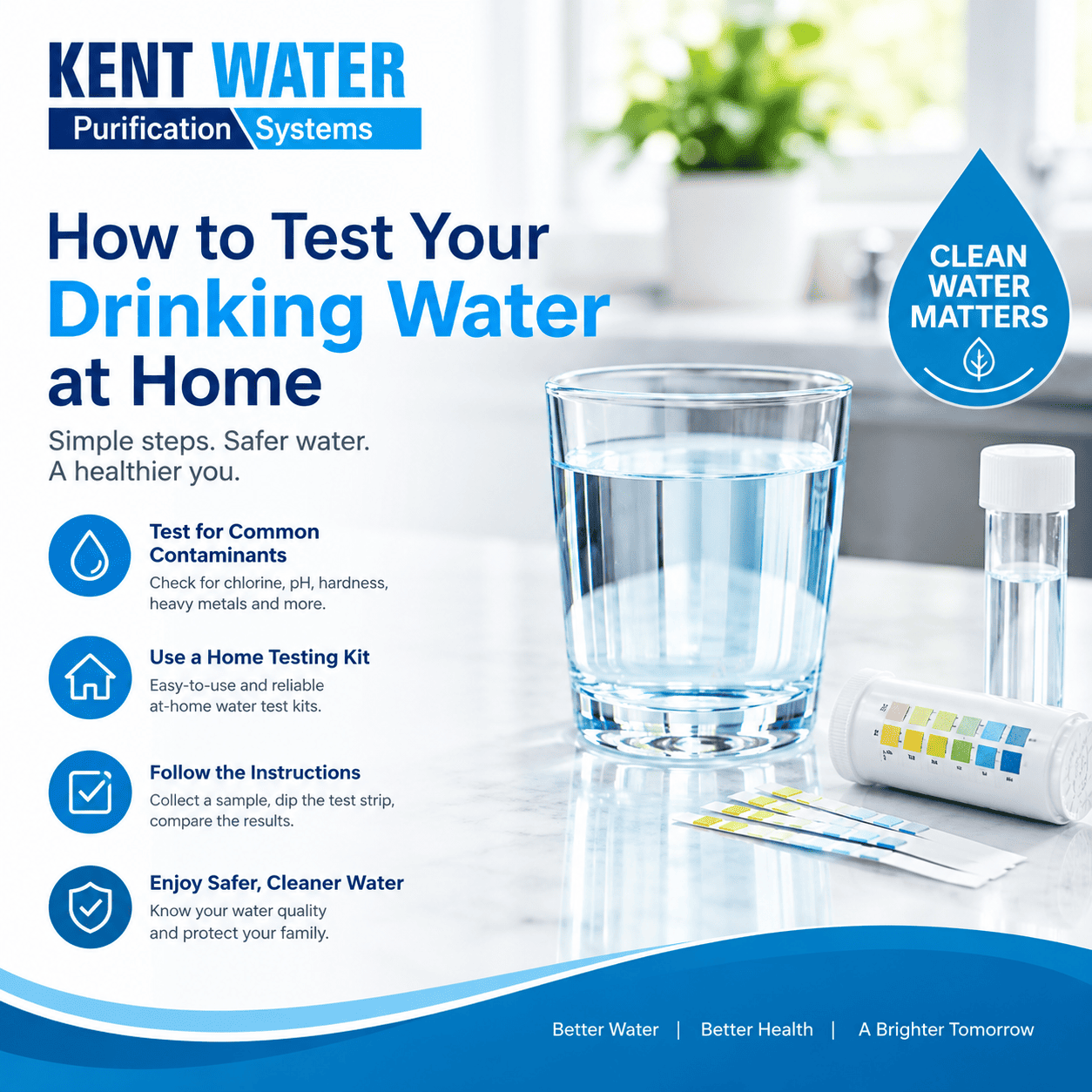
Test strips and basic kits, sold at most hardware stores, give you a quick read on:
- pH level, which affects taste, pipe corrosion, and how effective some filtration methods are
- Water hardness, useful for deciding whether a softener makes sense
- Chlorine levels, relevant mainly for municipal water
- General presence of certain metals, though sensitivity and accuracy vary a lot between brands
These are useful as a first screening step, especially for hardness and chlorine. They’re not reliable for anything with health implications. A strip that changes colour for “lead detected” typically can’t tell you whether you’re above or below a safety threshold with any precision, and it won’t catch bacteria at all.
When You Need a Certified Lab Instead
For anything that actually matters for health, bacteria, lead, PFAS, nitrates, arsenic, or pesticides, a certified lab is the only reliable option. Accredited labs use equipment and methods that can detect contaminants at the low concentrations where health guidelines actually apply, something no home strip is built to do.
In Ontario, Public Health Ontario offers free testing specifically for bacterial contamination (E. coli and total coliforms) for private well owners. This program only covers bacteria, though. For anything else, chemicals, metals, nitrates, sodium, fluoride, you need to go through a private accredited laboratory, and your local public health unit can typically point you to one.
Step-by-Step: How to Test Your Water Properly
- Decide what you’re testing for. Bacteria and hardness need different tests than lead or PFAS. Don’t buy a general kit hoping it covers everything.
- Get the right sample container. Public Health Ontario, for example, only accepts samples collected in their specific sterile bottle, since other containers can contaminate the result.
- Follow the collection instructions exactly. Run the tap for a few minutes if instructed, or don’t, depending on whether you’re testing for what’s in the plumbing versus the source water. Instructions vary by test type, so read them before you fill the bottle.
- Submit promptly. Bacterial samples especially need to reach the lab quickly, often within 24 to 48 hours, or results become unreliable.
- Interpret the results with help if needed. Public health inspectors can walk you through what a bacterial result means. For chemical results from a private lab, ask the lab or a water treatment professional to explain anything above a guideline value.
Expert tip: Test more than once if your first result is borderline or your water source is variable, such as a well affected by seasonal changes. Public Health Ontario itself describes a single sample as only a snapshot, not a guarantee of ongoing safety.
Home Test Kit vs. Certified Lab: Quick Comparison
| Factor | Home Test Strip | Certified Lab Test |
| Cost | Low, often under $20 | Free (bacteria, via public health) to $100+ (private lab panels) |
| Turnaround | Instant | 2–4 business days typically |
| Accuracy | Rough screening only | Precise, health-guideline level |
| Covers bacteria | No | Yes |
| Covers lead, PFAS, nitrates | Rarely reliably | Yes, with the right panel |
| Best for | Hardness, chlorine, general curiosity | Anything with a health question attached |
Signs You Should Test Sooner Rather Than Later
- Your home was built before the 1980s and still has original plumbing, which raises the odds of lead solder or lead service lines
- You’re on a well near agricultural land, a septic system, or a former industrial site
- You’ve noticed a change in taste, smell, or colour
- There’s been recent flooding, heavy rainfall, or well maintenance work nearby
- A household member is pregnant, an infant, or has a compromised immune system, since these groups face higher risk from contaminants
Key Takeaways
- Municipal water is tested regularly by your supplier, but that doesn’t cover lead or issues inside your own plumbing
- Private well owners are solely responsible for testing their own water, and it isn’t monitored by default
- Home test strips work fine for hardness and chlorine, not for bacteria or trace contaminants
- Ontario offers free bacterial testing for private wells through Public Health Ontario, but chemical testing requires a private accredited lab
- One test result is a snapshot, not a permanent guarantee, especially for well water
Frequently Asked Questions
Is my tap water safe to drink without testing it myself? If you’re on municipal water, it’s tested regularly by your supplier and generally safe, though checking your municipality’s published water quality report is a reasonable step, especially if your home has older plumbing.
How often should I test well water? Public health guidance generally recommends testing well water for bacteria several times a year, and more often after events like flooding, spring thaw, or well maintenance.
Can I test for lead at home accurately? Basic home kits can screen for the presence of lead but aren’t precise enough to compare against health guideline values. A certified lab test is needed for an accurate reading.
Does boiling water make it safe if I can’t test it?
Boiling kills most bacteria and parasites but does nothing for chemical contaminants like lead, nitrates, or PFAS. It’s not a substitute for testing.
Is well water testing really free in Ontario?
Public Health Ontario provides free bacterial testing (E. coli and total coliforms) for private well owners. Testing for chemicals, metals, or other contaminants requires a private accredited lab and typically involves a fee.
What does a water hardness test tell me?
It measures dissolved calcium and magnesium, reported in grains per gallon or milligrams per litre, which helps determine whether a water softener would benefit your home and appliances.
How long does a certified lab test take?
Through Public Health Ontario’s portal, bacterial results are typically available within two to four business days. Private lab panels for chemicals can take longer, depending on the scope of testing requested.
What should I do if my results come back unsafe?
Stop using the water for drinking, cooking, and brushing teeth until you understand the issue. A public health inspector or water treatment professional can help interpret results and recommend next steps, which might include disinfection, filtration, or further testing.
Conclusion
Testing your water doesn’t have to be complicated once you know which test actually answers your question. A home strip is fine for a quick hardness or chlorine check. Anything involving bacteria, lead, or chemical contaminants needs a certified lab, and in Ontario, that starts with a free bacterial test through Public Health Ontario for well owners.
If your results point to a filtration need, or you’d rather skip the guesswork entirely, Kent Water can test your home’s water and walk you through what the numbers actually mean before recommending a system.