Proud to be Canadian
4.9 Google Reviews | CWQA Member | Manufacturer Warranty Included | 30-Day Trial Period

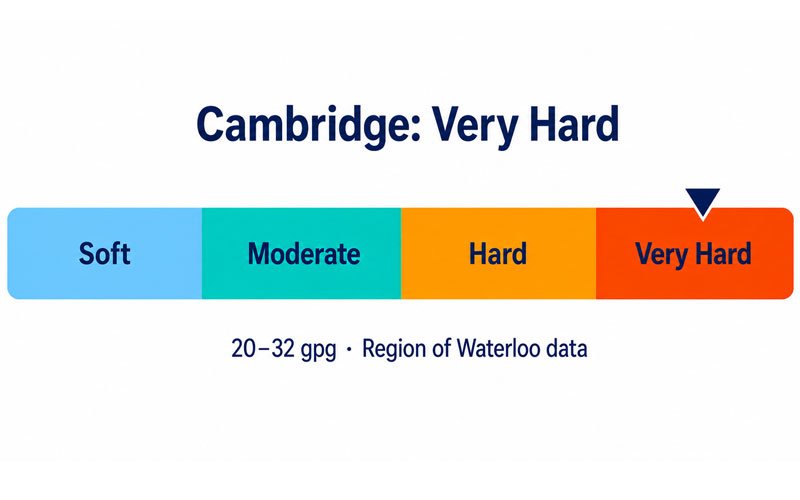
Cambridge sits on some of the hardest water in Ontario, whether it reaches you through the municipal system or your own well - both draw from the same mineral-rich groundwater underlying the region. For the majority of Cambridge on municipal water, the Region of Waterloo's own testing puts hardness at 20 to 32 grains per gallon (342–548 mg/L), roughly two to three times the provincial average. As the Region of Waterloo states plainly: groundwater picks up minerals as it travels underground, which is why it runs harder than lake-sourced water in cities like Mississauga or Oakville - the water is safe to drink, but that hardness affects scale buildup and appliance wear over time.
If you're on a private well, common on rural properties outside Cambridge's urban core, your water draws from the same regional aquifer system - so similarly hard water is likely, but since wells aren't tested or filtered by the municipal system, the exact number varies well to well and needs its own test to confirm. Cambridge's hardness sits well past the 10.5 gpg threshold water quality standards classify as "very hard," and because it comes from groundwater rather than a lake, that hardness stays consistent year-round rather than shifting with the seasons the way lake-sourced water can.

Cambridge's municipal distribution system is disinfected with sodium hypochlorite - chlorine, confirmed in the Region of Waterloo's own 2024 Annual Water Quality Report - not chloramine, which some other Waterloo Region communities use. Chlorine keeps the water safe, but layered on top of Cambridge's already-high mineral content, it can leave a more noticeable taste at the tap than either factor alone would.
If you're on a private well, chlorine isn't the issue since wells aren't part of the municipal treatment system - but sulfur and iron commonly are. A rotten-egg smell points to sulfur; a metallic taste or orange staining on fixtures points to iron. Both are common in this region's groundwater and, like hardness, need their own test to confirm and treat.
On municipal water, two things are happening at once - chlorine disinfection and a high mineral content from groundwater. A combined softening and chlorine filtration system addresses both. On a private well, taste issues usually come from sulfur or iron instead of chlorine - a water test identifies which, then filtration is matched to what's actually there.

For most Cambridge homes - in Galt, Preston, Hespeler, and the newer subdivisions between them - a whole-home water softener isn't a nice-to-have the way it might be in a moderately hard city. At Cambridge's hardness level, softening is close to a baseline necessity for protecting water heaters, pipes, and appliances, and correctly sizing the system matters more here than almost anywhere else in the GTA - an undersized softener will fall behind fast at this hardness.
If you're on a rural well, your test result determines the path from there: a softener alone if hardness is the only issue, or a softener paired with iron/sulfur filtration if your water also shows the metallic taste or rotten-egg smell common in this region's groundwater.

Heavy scale, a water heater working overtime, or a softener that never seems to keep up?
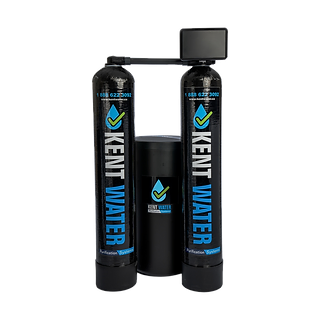
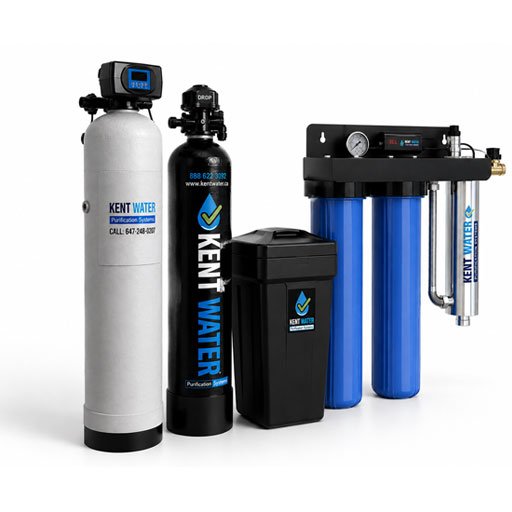
At Cambridge's hardness level, correct sizing matters - the Kent 5.0 Filter + Softener Duplex Tanks System is built for continuous soft water even during heavy regeneration cycles.

Want app-based monitoring so you can see your system actually keeping up?
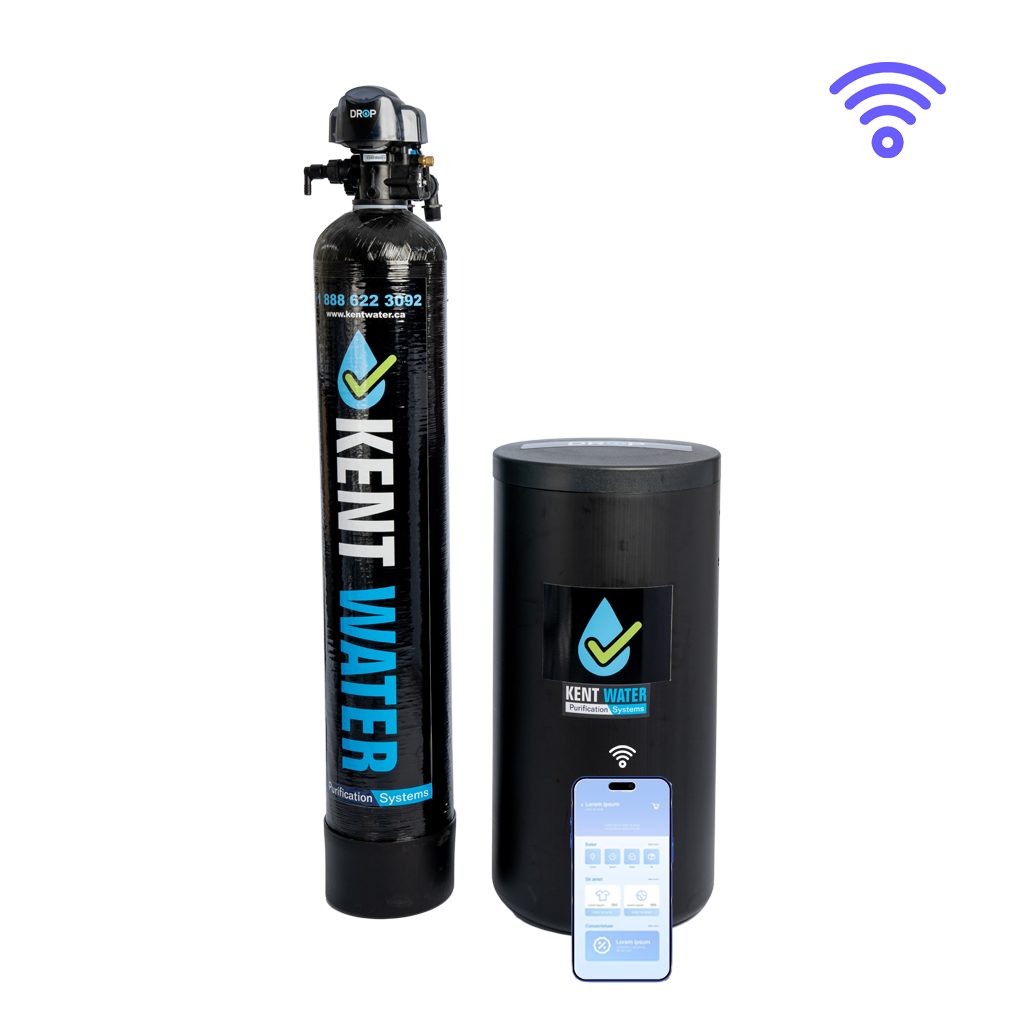
The Kent DropPro Connect works for both city and well water, with real-time monitoring.

Want the cleanest possible drinking water, with full mineral restoration?
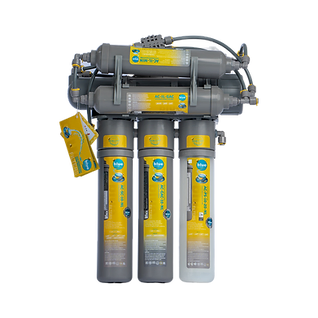
The Kent NL7 Reverse Osmosis System 7 stages of filtration plus remineralization.

Tight under-sink cabinet, or want the simplest install?
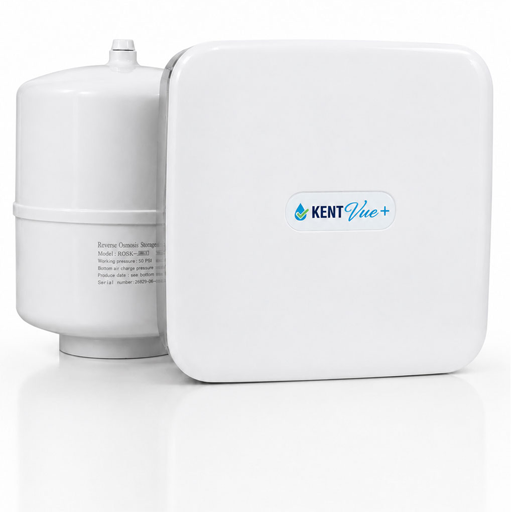
The Kent Vue+ slim casing, runs entirely on water pressure.

On a rural property outside Cambridge's core?
If your test shows hardness only, a well water softener is likely enough. If it also shows iron or sulfur, pair it with iron/sulfur filtration or UV disinfection.

Not sure which one describes your home?
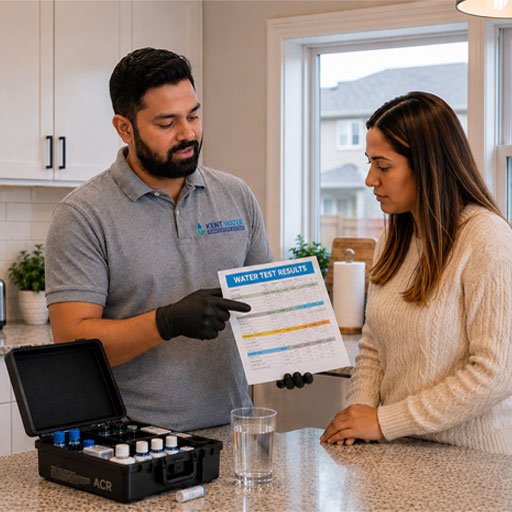
A free water test tells us exactly what you need.

Cambridge isn't one neighbourhood - it's three historic towns, Galt, Preston, and Hespeler, plus the hamlet of Blair, amalgamated into one city in 1973. Each still has its own character: Galt's downtown core runs along the Grand River with 19th-century limestone architecture, Hespeler grew as a textile town in the city's north end, and Preston sits between the two with some of the area's older settlement homes. Our Cambridge technicians work across all three, plus the newer subdivisions that have grown up between them since amalgamation.
Rated 4.9 stars on Google - verified via Kent Water's Google Business Profile. Kent Water is a member of the Canadian Water Quality Association (CWQA).
Every water test is genuinely free - no charge, no obligation to buy.
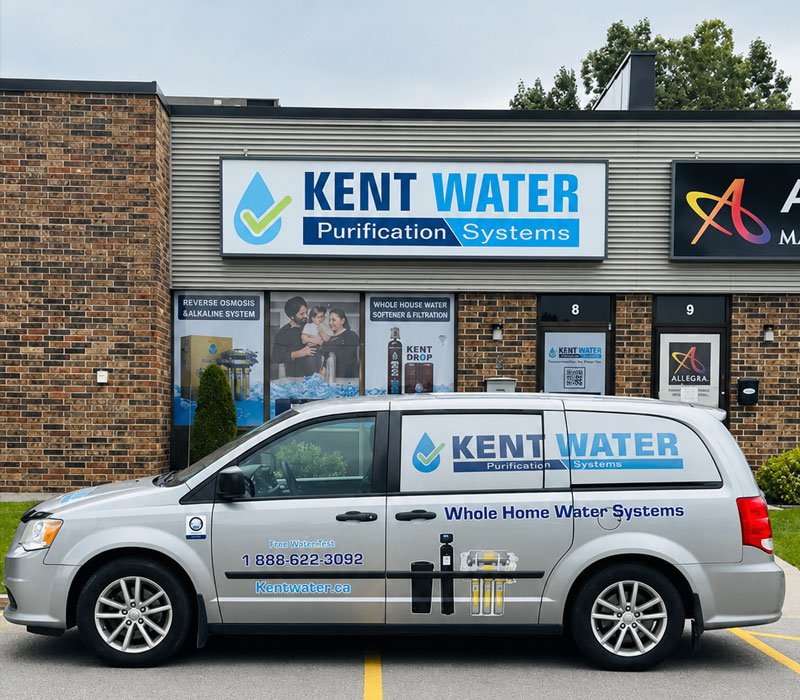
Flexible plans and 0% financing are available, along with a 30-Day Trial Period and manufacturer warranty on every system.Kent Water's coverage doesn't stop at Cambridge - our two locations put us within reach of most of the GTA and Southern Ontario, including cities with water profiles as different from Cambridge's as Mississauga's lake-fed supply is from this region's groundwater. Wherever you are, the same approach applies: a real water test for your address, not a citywide assumption. Kent Water also serves: